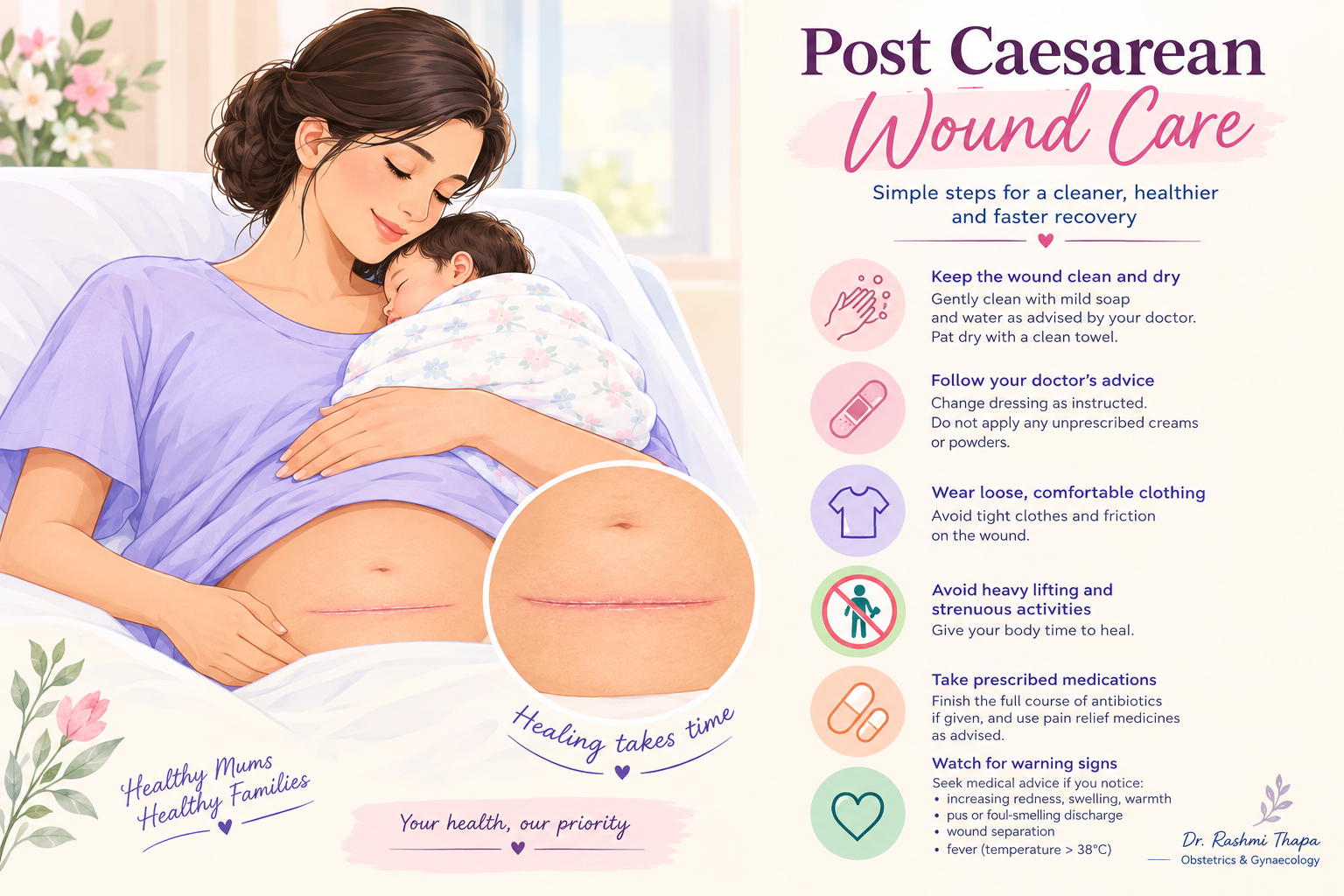
A Caesarean section (C-section) is a major surgical procedure that requires adequate time and care for proper healing. While most women recover well after surgery, appropriate wound care is essential to promote healing, minimise the risk of infection, and ensure a smooth recovery during the postnatal period.
As you recover from childbirth and adjust to caring for your newborn, it is important to pay attention to your own health and well-being. Understanding how to care for your surgical wound and recognising the early signs of complications can help you recover safely and confidently.
1. Keep the Surgical Wound Clean and Dry
Maintaining good hygiene is one of the most important steps in preventing wound infection. Follow your healthcare provider’s instructions regarding dressing removal. Depending on the type of dressing used, it may be removed within the first few days after surgery, while some dressings are designed to remain in place for longer.
Once your doctor has advised that you may shower, gently allow clean water to flow over the incision. Avoid scrubbing the wound or using harsh soaps, antiseptics, powders, or other products directly on the incision unless specifically recommended.
After bathing, gently pat the area dry with a clean, soft towel. Avoid rubbing the wound, as this may irritate the healing skin.
2. Follow the Recommended Dressing and Wound Care Instructions
Different types of surgical dressings and skin closures require different care. Follow the specific instructions provided by your surgeon regarding dressing changes and removal.
If your incision has been closed with surgical glue or adhesive strips, do not pull them off or apply creams and oils over them unless advised by your doctor. If a dressing becomes wet, dirty, or loose, seek guidance on whether it needs replacement.
Routine application of antibiotic ointments, antiseptic solutions, or powders is generally unnecessary unless prescribed. Unnecessary products may irritate the skin or interfere with healing.
3. Wear Loose and Comfortable Clothing
Choose loose-fitting, breathable clothing that does not rub against or place pressure on the incision. Soft cotton garments and comfortable, high-waisted underwear may help reduce friction and irritation.
Try to keep the area clean and dry, particularly beneath the abdominal skin fold, if present. Avoid tight waistbands that cause discomfort or trap moisture around the wound.
4. Avoid Excessive Physical Strain
Your body needs time to recover from surgery. During the initial weeks after a Caesarean section, avoid heavy lifting, strenuous exercise, and activities that cause pain or excessive abdominal strain.
Gentle walking is encouraged as soon as you are able, according to your healthcare team’s advice. Walking supports circulation, helps reduce the risk of blood clots, and gradually restores mobility.
When getting out of bed, rolling onto your side before pushing yourself up may help reduce discomfort around the incision. Support your abdomen with a pillow when coughing, sneezing, or laughing if these movements cause pain.
Gradually resume household activities and exercise according to your recovery and your doctor's advice. Avoid driving until you can move comfortably, perform an emergency stop safely, and meet any medical or local requirements.
5. Manage Pain and Support Healing
Mild tenderness, bruising, itching, or a pulling sensation around the incision may occur during healing and should gradually improve. Take pain-relieving medication only as recommended by your healthcare provider, particularly if you are breastfeeding.
If pain becomes progressively worse rather than improving, do not dismiss it as a normal part of recovery. Increasing pain may be an early sign of infection or another complication and warrants medical assessment.
6. Eat Well, Stay Hydrated, and Rest
Good nutrition supports tissue repair and helps restore your strength after childbirth. Include a balanced diet containing protein-rich foods such as pulses, lentils, eggs, dairy products, fish, or lean meat, along with vegetables, fruits, and whole grains.
Drink adequate fluids, especially if you are breastfeeding. Fibre-rich foods and sufficient fluids can also help prevent constipation, which may cause discomfort when straining.
Rest whenever possible and accept support from family members with household tasks and newborn care. Adequate rest, balanced nutrition, and gradual activity all contribute to recovery.
7. Warning Signs: When Should You Seek Medical Attention?
Although most Caesarean wounds heal without complications, it is important to recognise symptoms that require medical review.
Contact your doctor promptly if you notice:
- Increasing redness, warmth, or swelling around the incision.
- Worsening pain or tenderness instead of gradual improvement.
- Pus, foul-smelling discharge, or persistent fluid leakage from the wound.
- The wound edges separating or the incision opening.
- Fever of 38°C (100.4°F) or higher, or chills.
- A new or enlarging lump, or increasing swelling around the incision.
Seek urgent medical care if the wound opens significantly, you feel very unwell, or you develop rapidly spreading redness, severe abdominal pain, faintness, or other symptoms suggesting a serious complication.
Do not wait for your routine postnatal appointment if you develop these warning signs. Early assessment and treatment can prevent complications from becoming more serious.
8. Keep Your Postnatal Follow-Up Appointments
Your postnatal check-up allows your gynaecologist to assess wound healing, review pain control, and address concerns about bleeding, breastfeeding, emotional well-being, and recovery.
Even if the incision appears to be healing well, attend the follow-up appointments recommended by your healthcare provider. Contact your doctor earlier if you have diabetes, significant anaemia, obesity, a previous wound infection, or any other condition that may affect healing.
A Final Word from Your Gynaecologist
Recovering from a Caesarean section takes time, patience, and self-care. Every woman's recovery is different, so avoid comparing your progress with that of others. Pay attention to your body, follow your healthcare provider’s instructions, and seek help whenever something does not feel right.
Remember, caring for yourself is just as important as caring for your newborn. With appropriate wound care, adequate rest, good nutrition, and timely medical attention when needed, you can support a safe and healthy recovery.
Wishing you a comfortable recovery and a healthy beginning to motherhood!
Stay safe, Happy healing ❤️🩹
This educational content does not replace individual medical assessment. Consult a qualified clinician for personal advice.